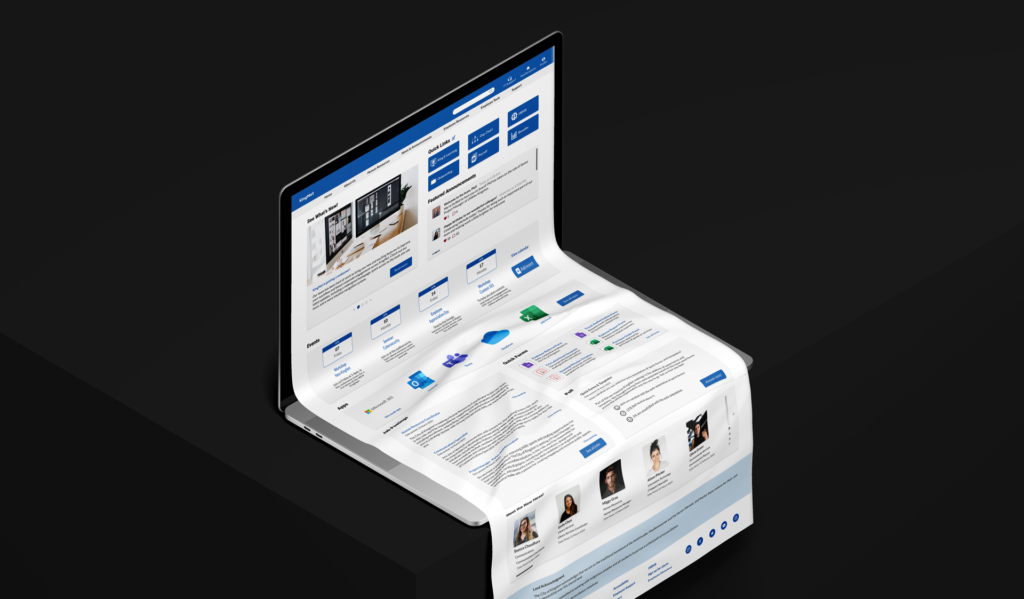

The KingNet 2.0 Project.
- Team mates:
- Alison Pitcher,
- Miggy Grau,
- Sheeza,
- Jaspreet Kaur
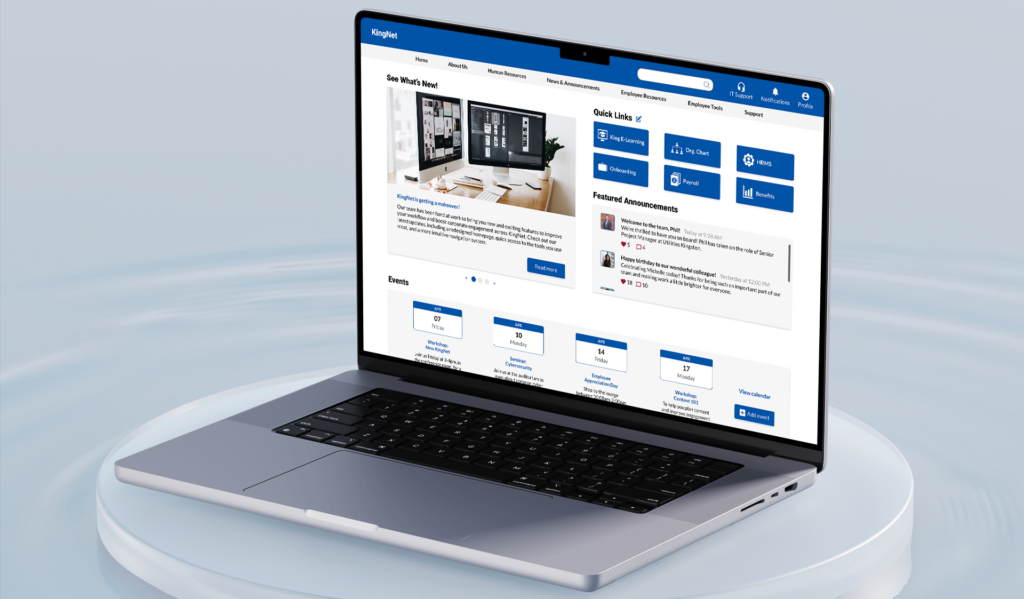
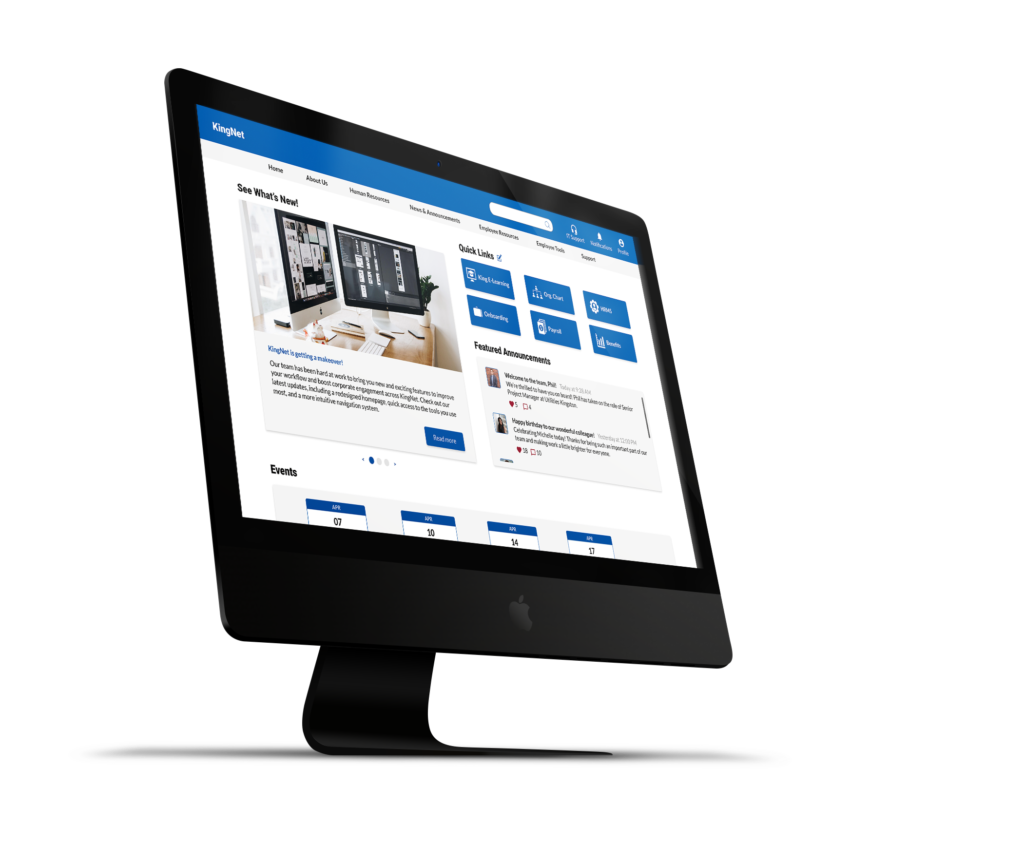
In collaboration with the City of Kingston, Ontario, Canada, this project aimed to revitalize KingNet, the organization's intranet platform. KingNet's outdated design and limited functionality had hindered employee engagement. To address this, the project sought to modernize KingNet into a cloud-based solution integrated with Office 365, accessible on mobile devices. The goal was to enhance communication, collaboration, and productivity among employees, thereby improving internal communication and employee engagement across the organization.
Project Details.
Project Facts.
Project Duration: 4 Months
Client: City of Kingston, CA
Project type: Group Project
Responsibilitities.
UX Research
Sketching & Wireframing
Interaction Design
High-Fidelity Prototyping
Presentation
Tools Used.
Miro
Google forms
Adobe XD
Adobe Photoshop
Adobe Illustrator
Let's Get Started.
Explore the journey of transforming KingNet, the City of Kingston’s Intranet website, as we breathe new life into its digital presence,
aligning it with the organization’s essence and enhancing user experience.
The KingNet 2.0 Journey.
Phase 1.
Primary Research - Literature Review.
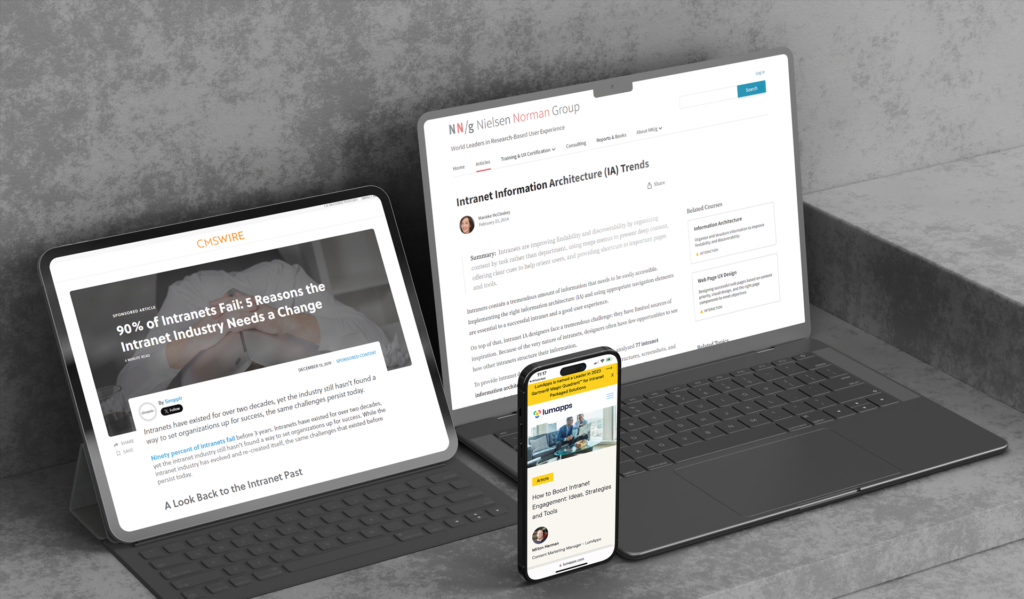
We consulted trusted sources like the Nielsen Norman Group (NN/g) for insights into intranet design best practices. Integrating NN/g’s recommendations alongside other industry findings, we aimed to optimize KingNet’s user experience for improved engagement and usability.
Card Sorting Activity & Analysis of Results for IA.
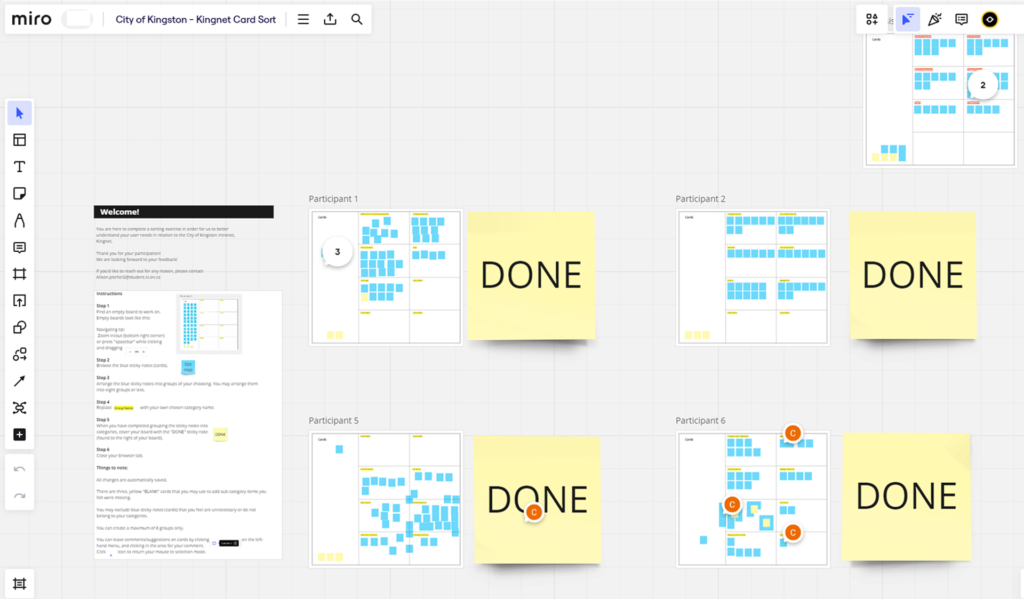
Office workers from the City of Kingston participated in a collaborative card sorting activity. They organized content found within KingNet into groups, providing insights into user preferences and information organization. This exercise informed the development of an –
intuitive information architecture for the platform.
Activity Details.
Type: Hybrid card sort
Participants: 4 office workers
Instructions: Participants were instructed to group cards, assign names to each group, and limit the total number of groups to a maximum of 8.
Tools: The activity was facilitated using Miro, ensuring a seamless and collaborative process.
Activity Analysis.
Despite minor variations, participants converged on common groupings, laying the groundwork for our final information architecture. Notably, four recurring categories emerged across all card sorts:
- Employee Resources
- About the Corporation
- Human Resources
- News & Announcements
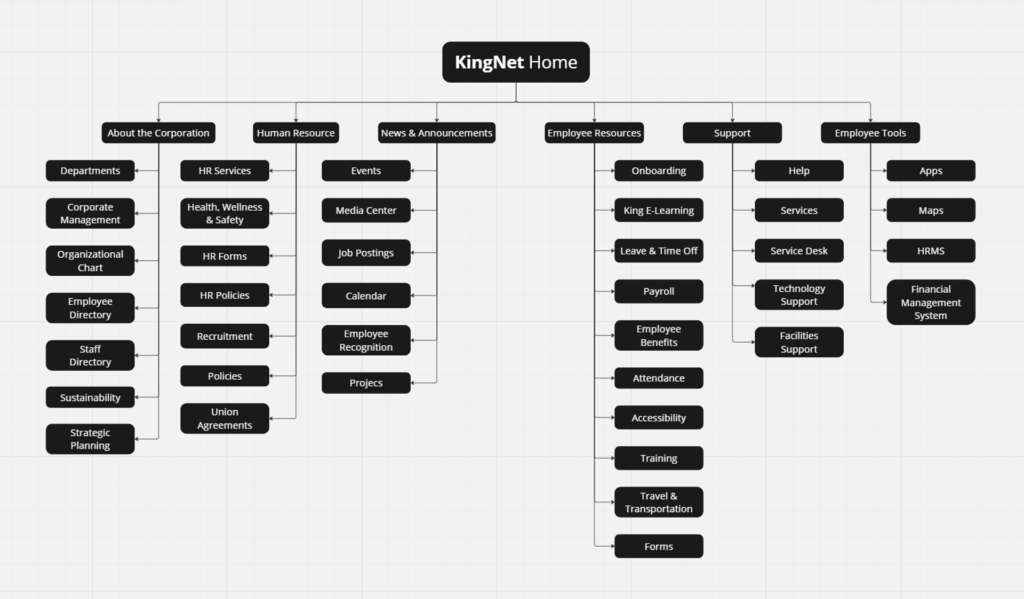
Additionally, a fifth category, Support, was incorporated based on its prevalence in NN/g’s study on intranet portals. Another common thread was the inclusion of a category for Employee Tools, reflecting external tools essential for task completion.
Finalized IA. (Information Architecture)
Phase 2.
Survey & Results Analysis.
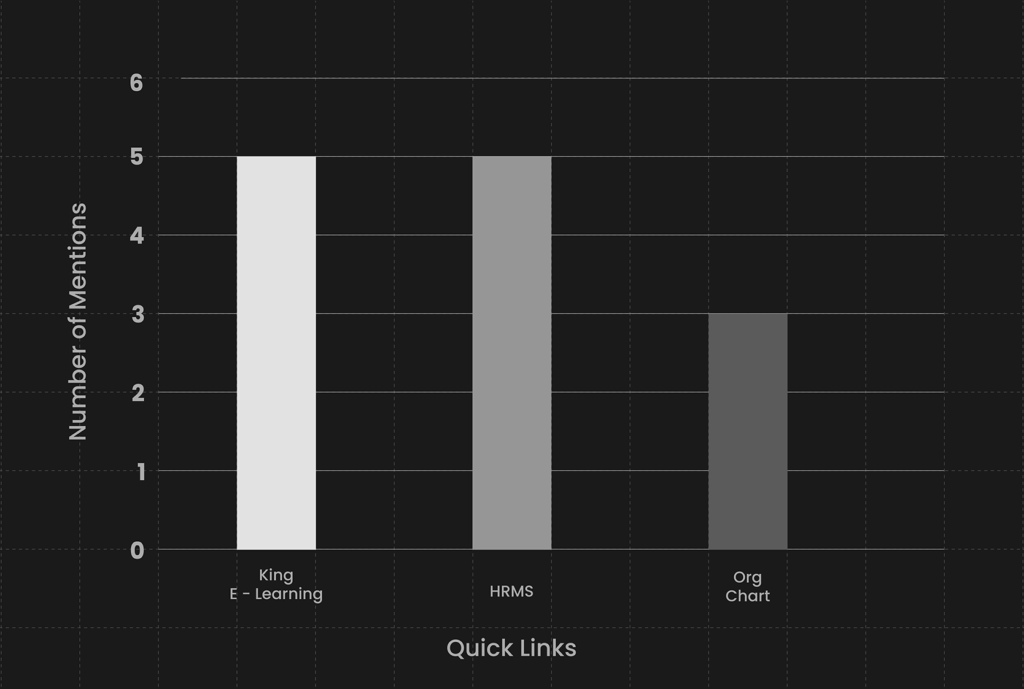
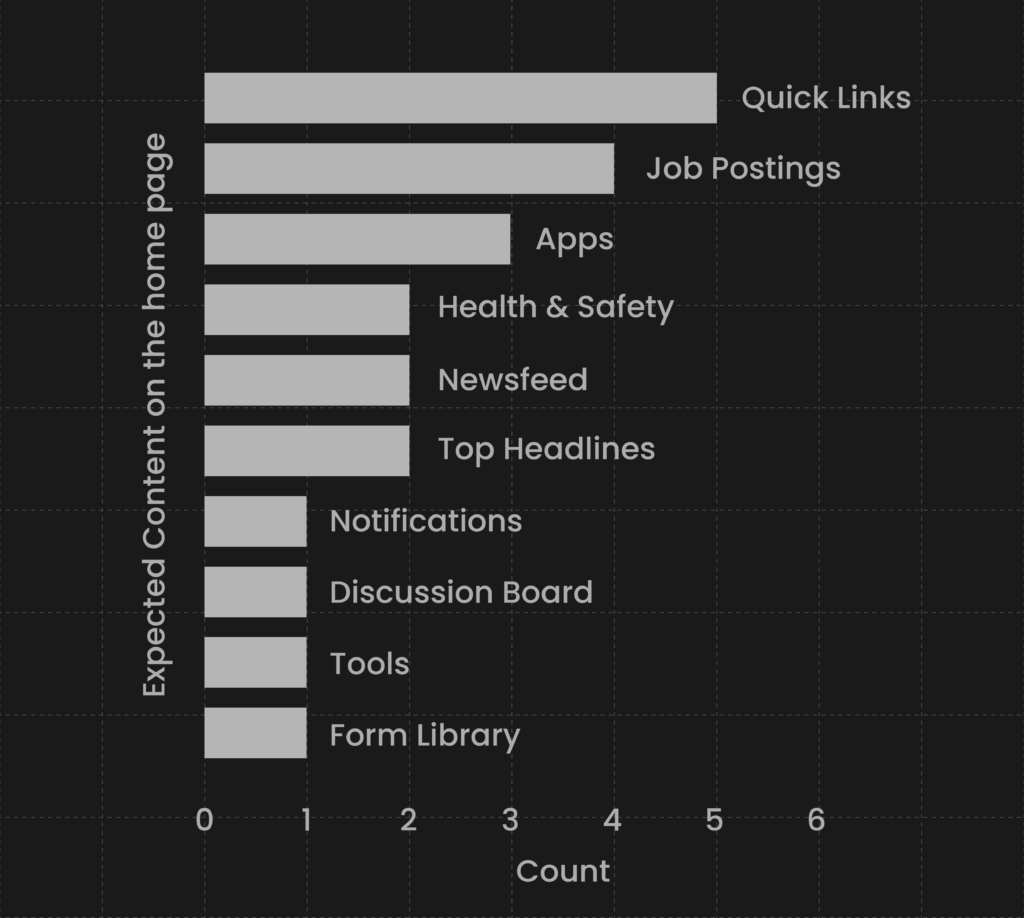
Building upon the insights gathered in Phase 1 and the finalized Information Architecture (IA) for KingNet,our group was directed to focus on refining the home page and employee essentials page. We conducted a survey among employees, including new hires, to gather quantitative data on their preferences and experiences with KingNet. The survey aimed to uncover the most sought-after resources, assess usability, and gauge overall user sentiment. Analyzing the results, we found unanimous identification of key resources like King e-Learning, highlighting their importance. Preferences for quick links varied, indicating diverse user needs. Users expressed expectations for essential content on the home page and emphasized the importance of access to vital information on the My Essentials page, informing design decisions to better meet user expectations.
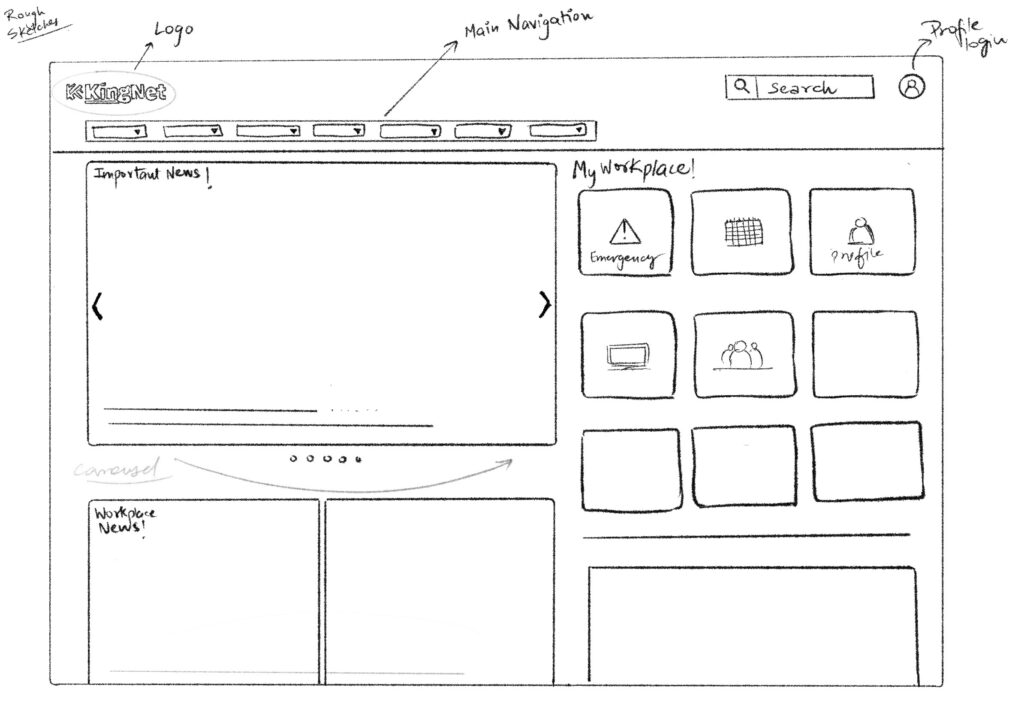
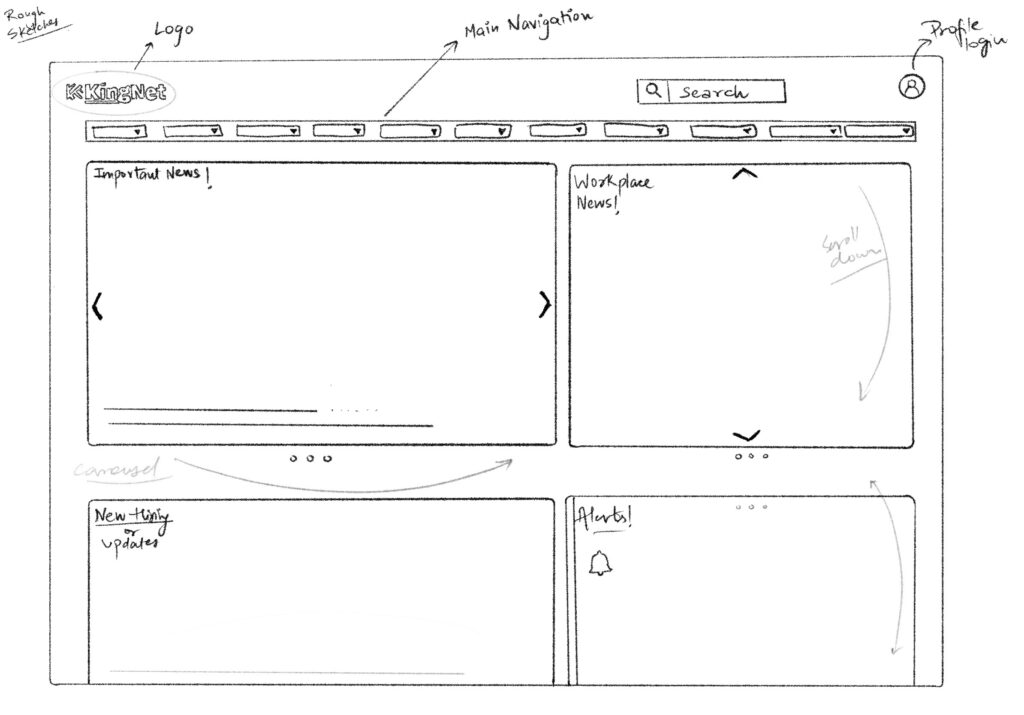
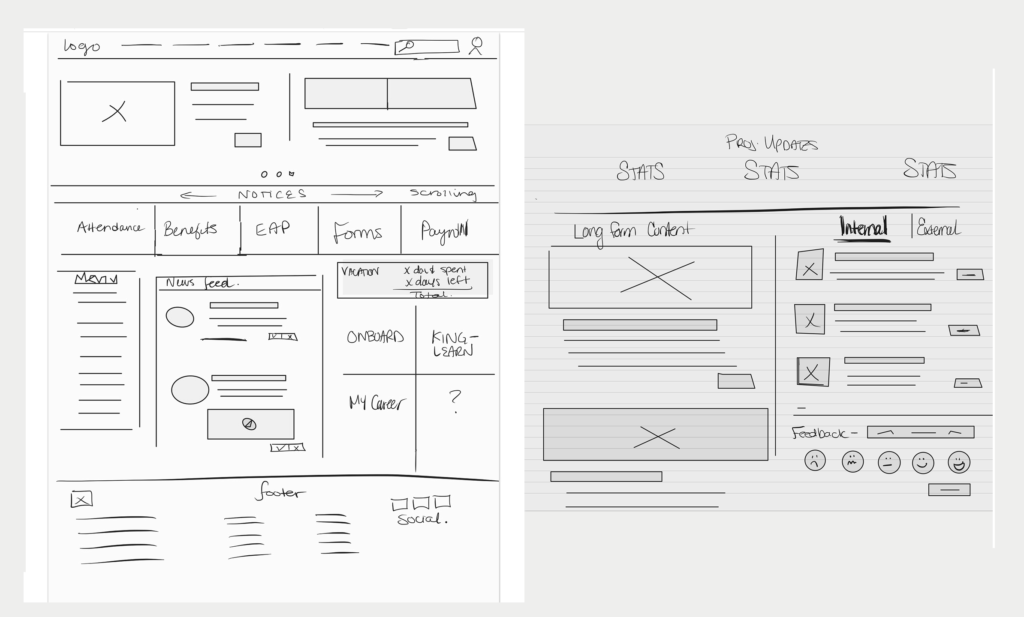
Initial Sketches.
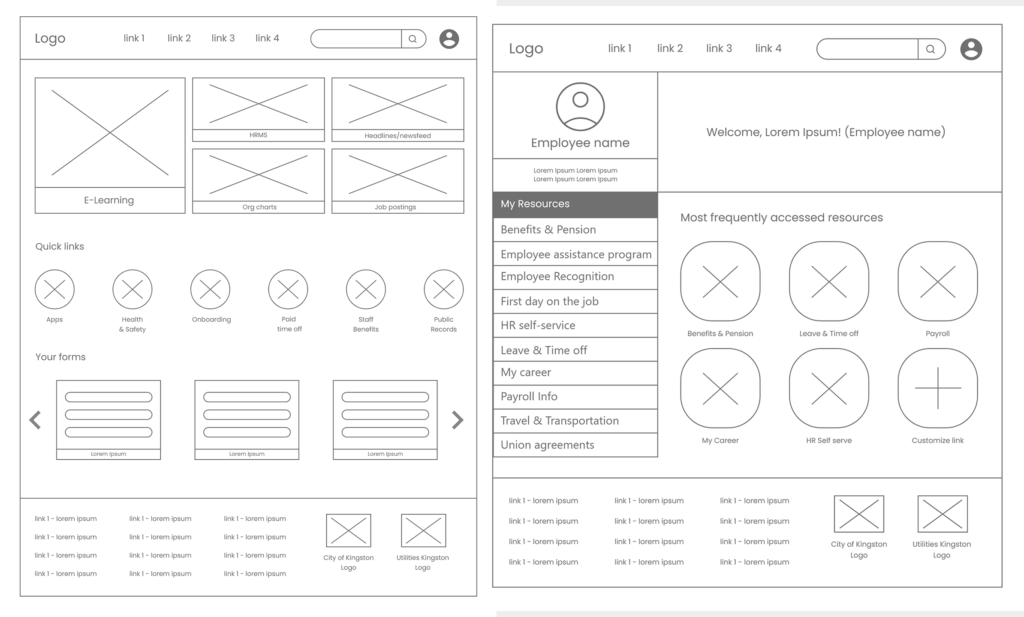
Our team developed preliminary sketches to explore design concepts and layout possibilities for KingNet. These sketches allowed us to visualize different interface options and iterate quickly based on stakeholder feedback and user requirements. They served as a foundational step in translating our design ideas into detailed wireframe prototypes for KingNet 2.0.
First Draft of Landing page wireframe.


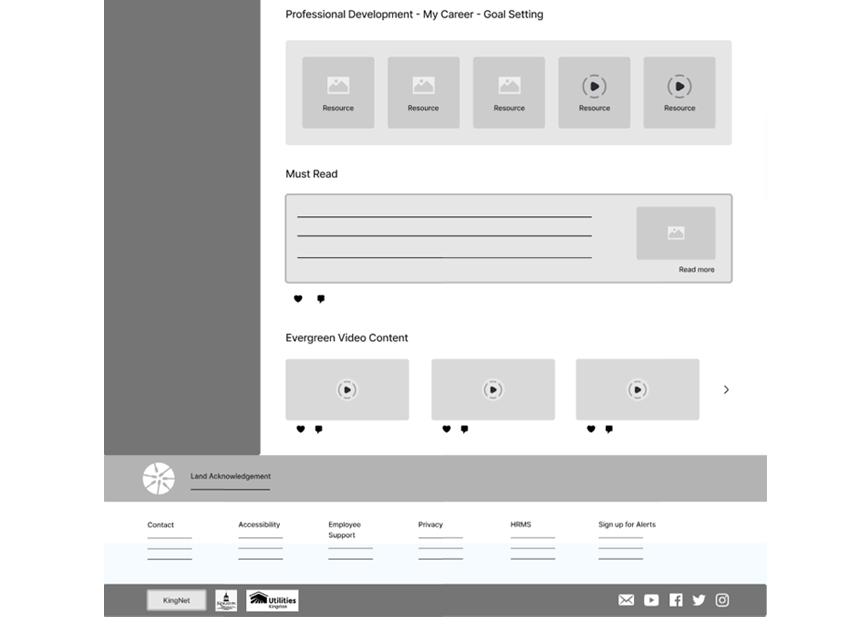
First Draft of Employee Resources page wireframe.


Phase 3.
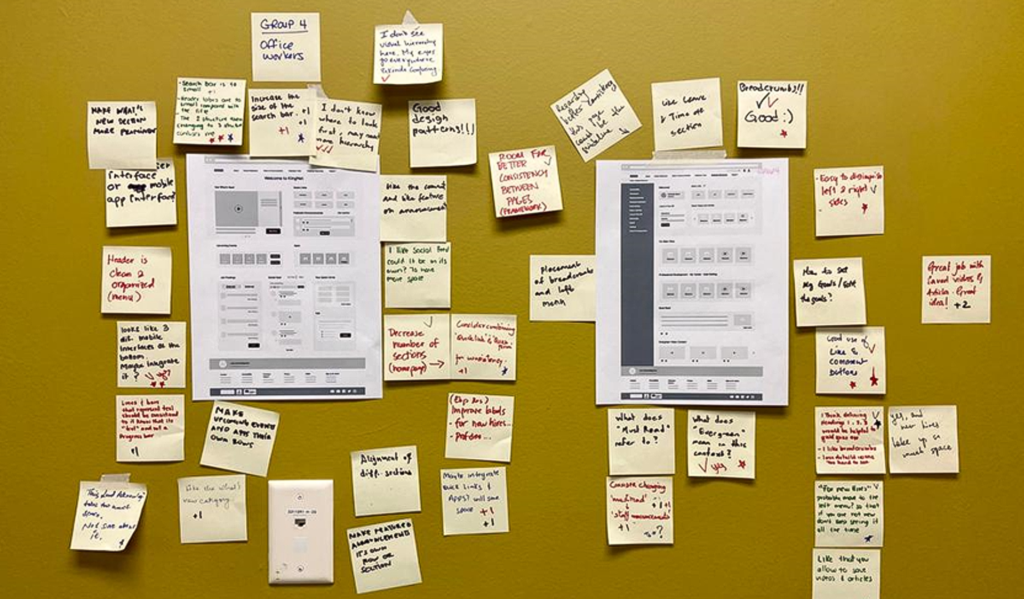
Internal critique session with UX Design students.
At the onset of the third phase, we engaged in an internal critique session with our peers, specifically with UX design students. Their valuable insights and critical viewpoints played a pivotal role in shaping our wireframe draft. Their feedback helped us make essential design decisions, ensuring that our wireframes were aligned with user-centered design principles and effectively addressed user needs and expectations.
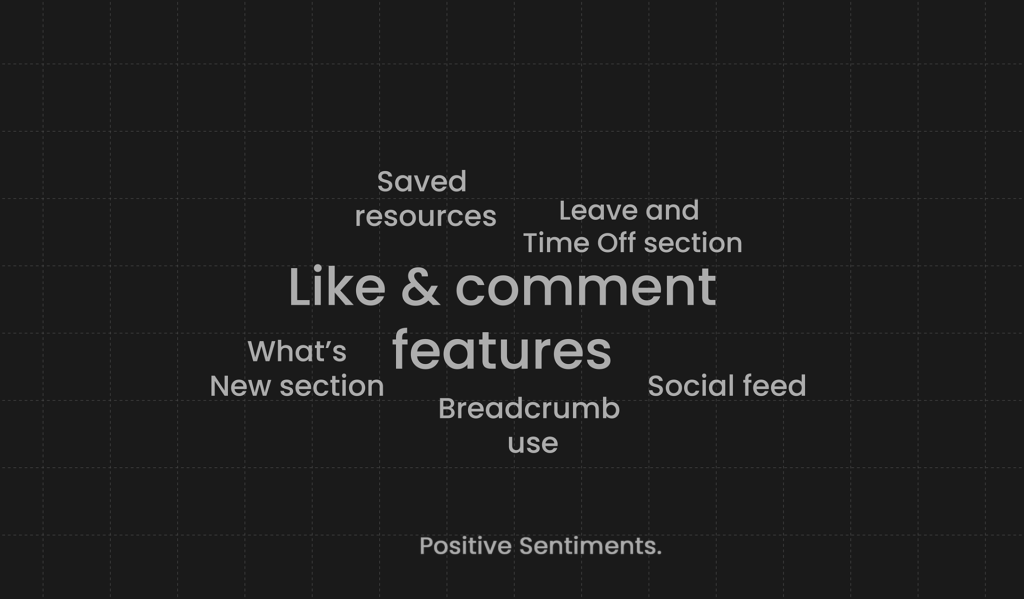
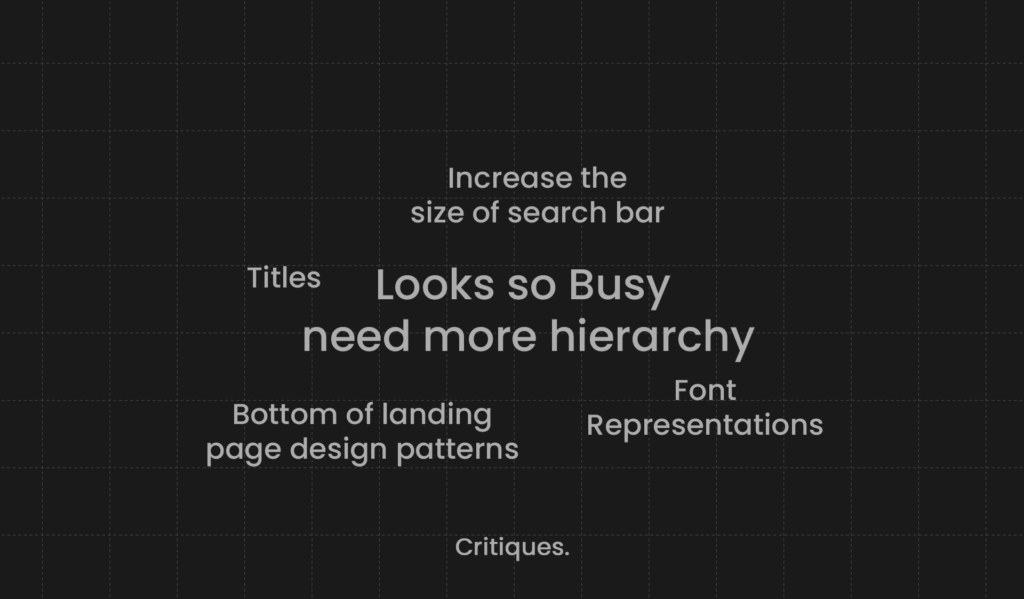
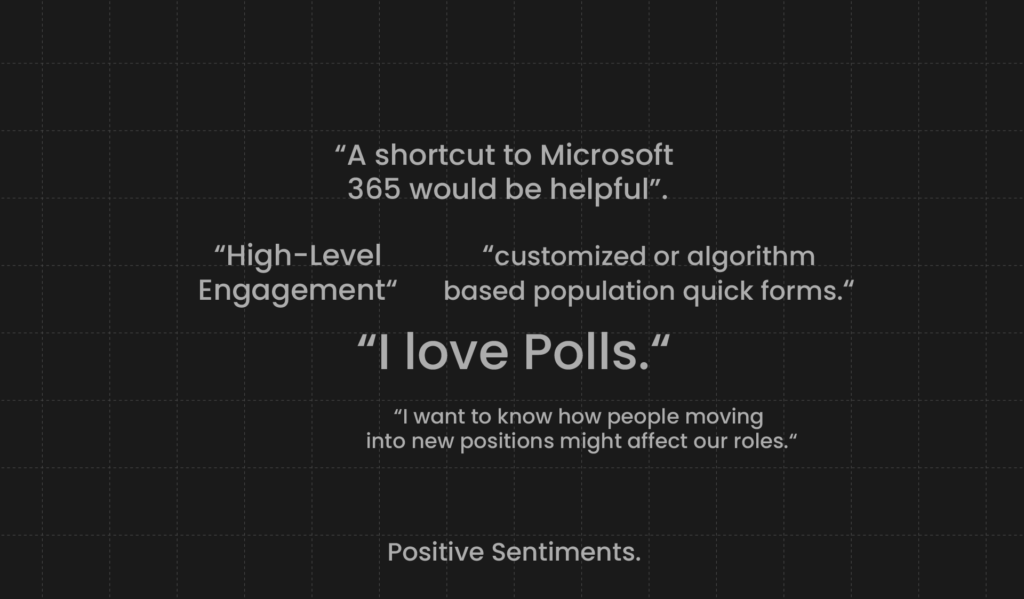
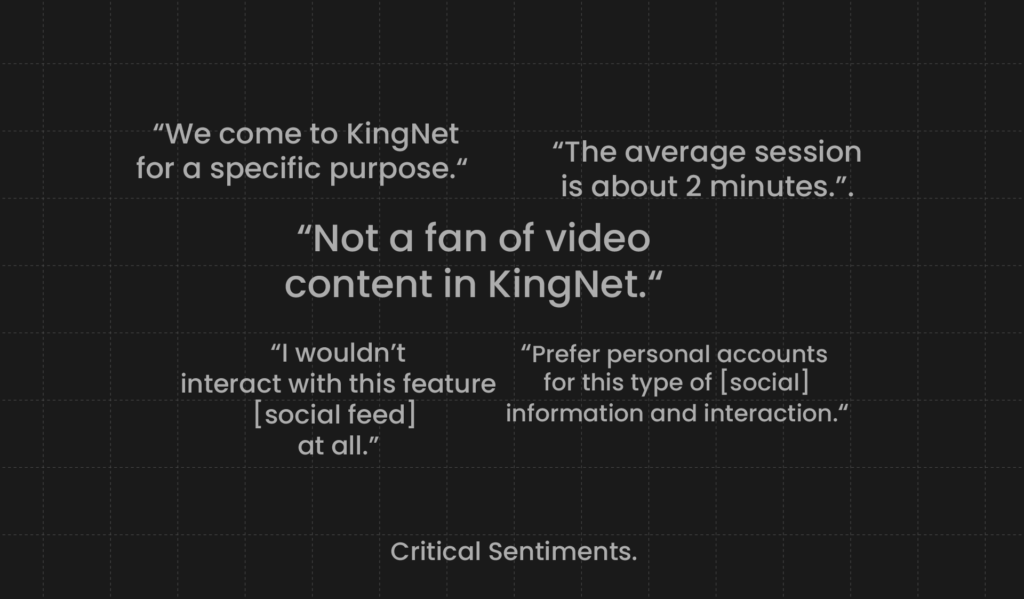
Positive Sentiments & Critiques.
Focus group with the office workers of the City of Kingston, the users of KingNet.
Afterwards, we conducted a focus group session with participants from different departments within the City of Kingston. Through open discussions, we gathered qualitative insights into their experiences and expectations regarding KingNet. Their feedback informed design refinements, ensuring the platform would effectively meet user needs.
Positive & Critical Sentiments.
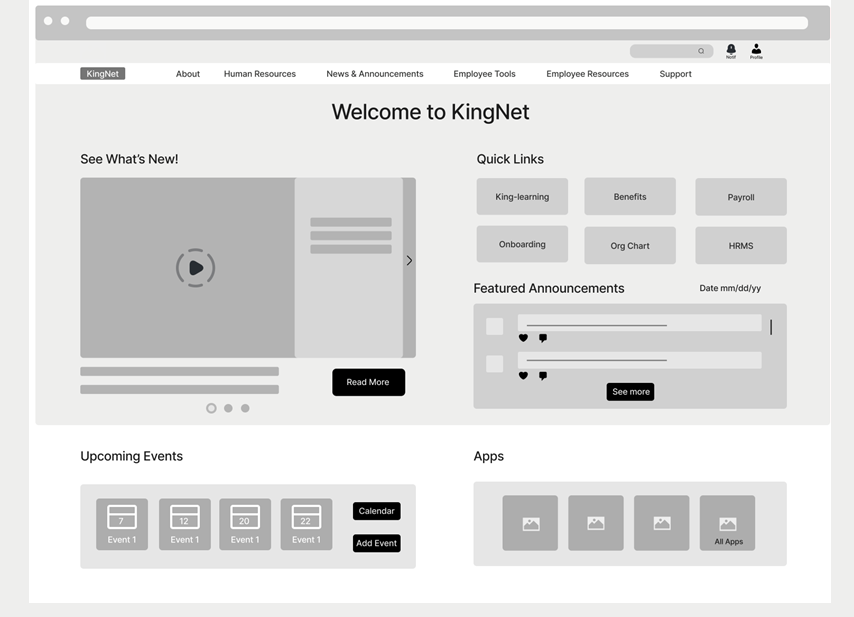
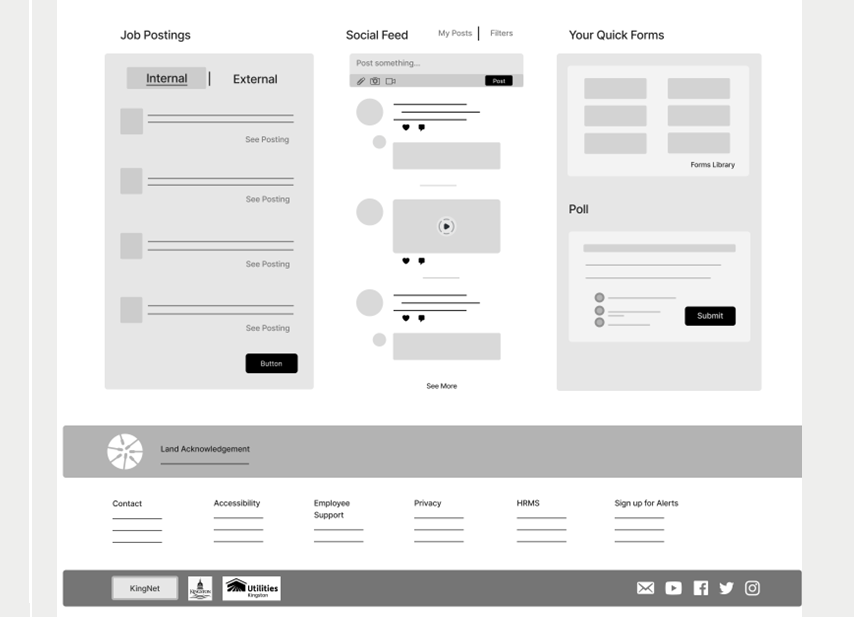
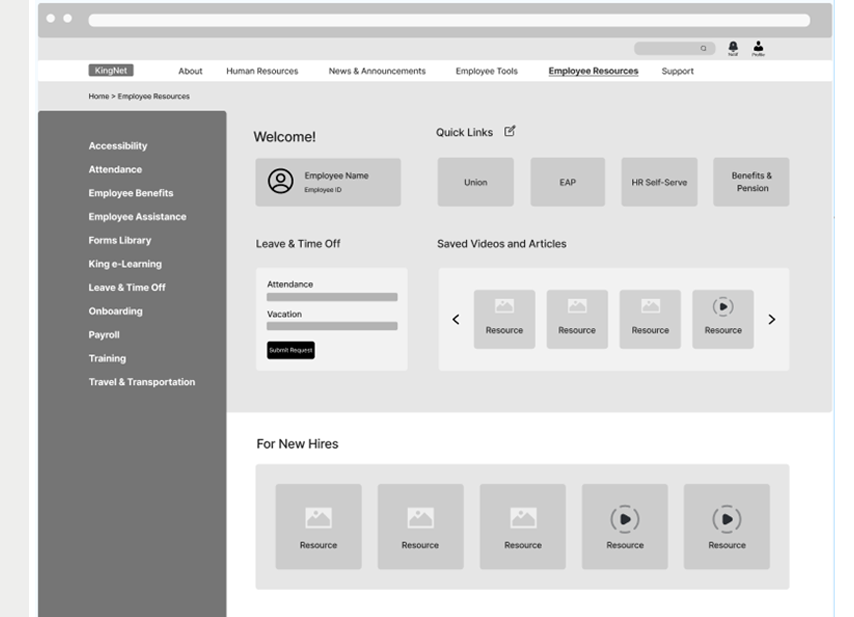
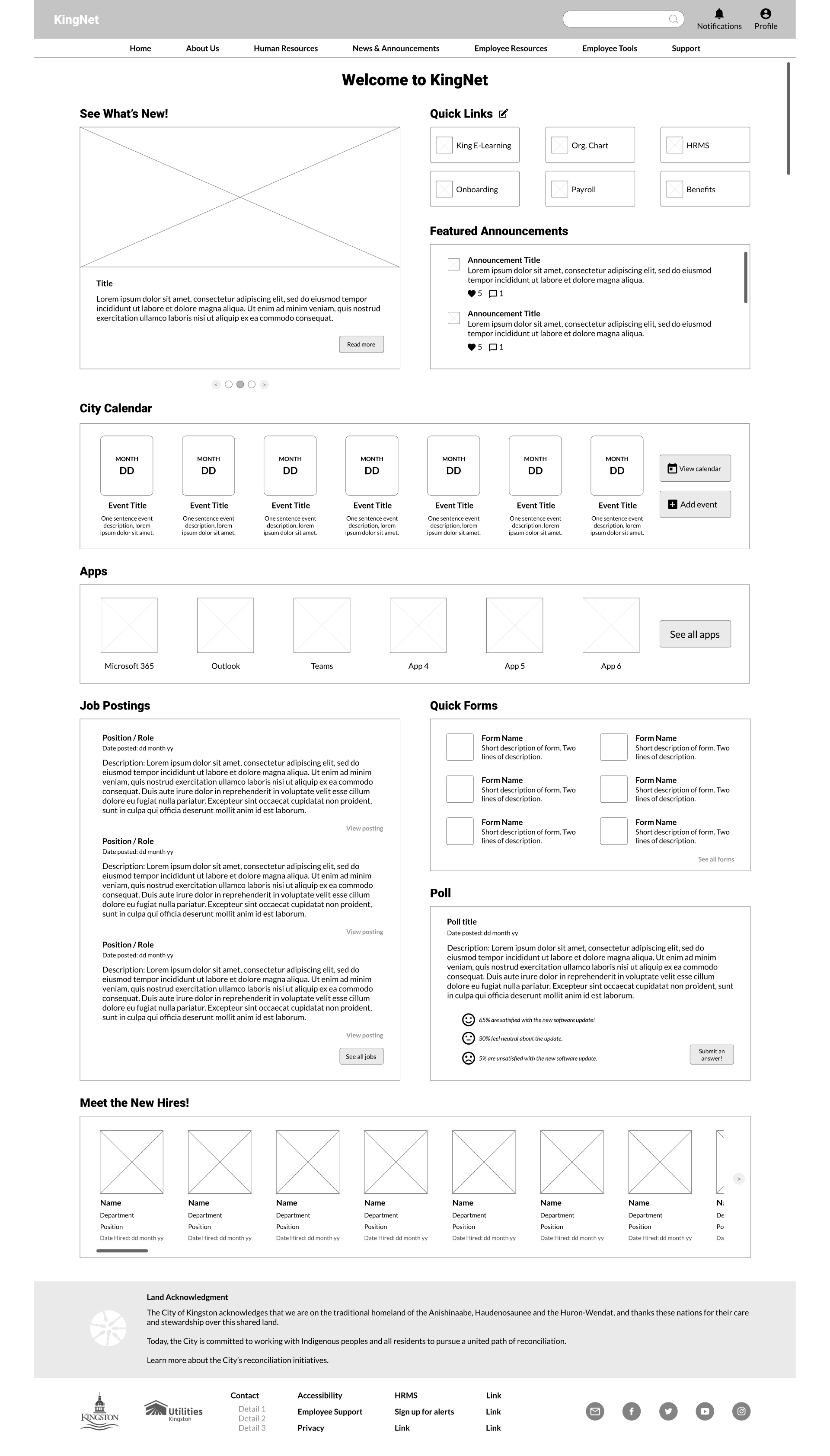
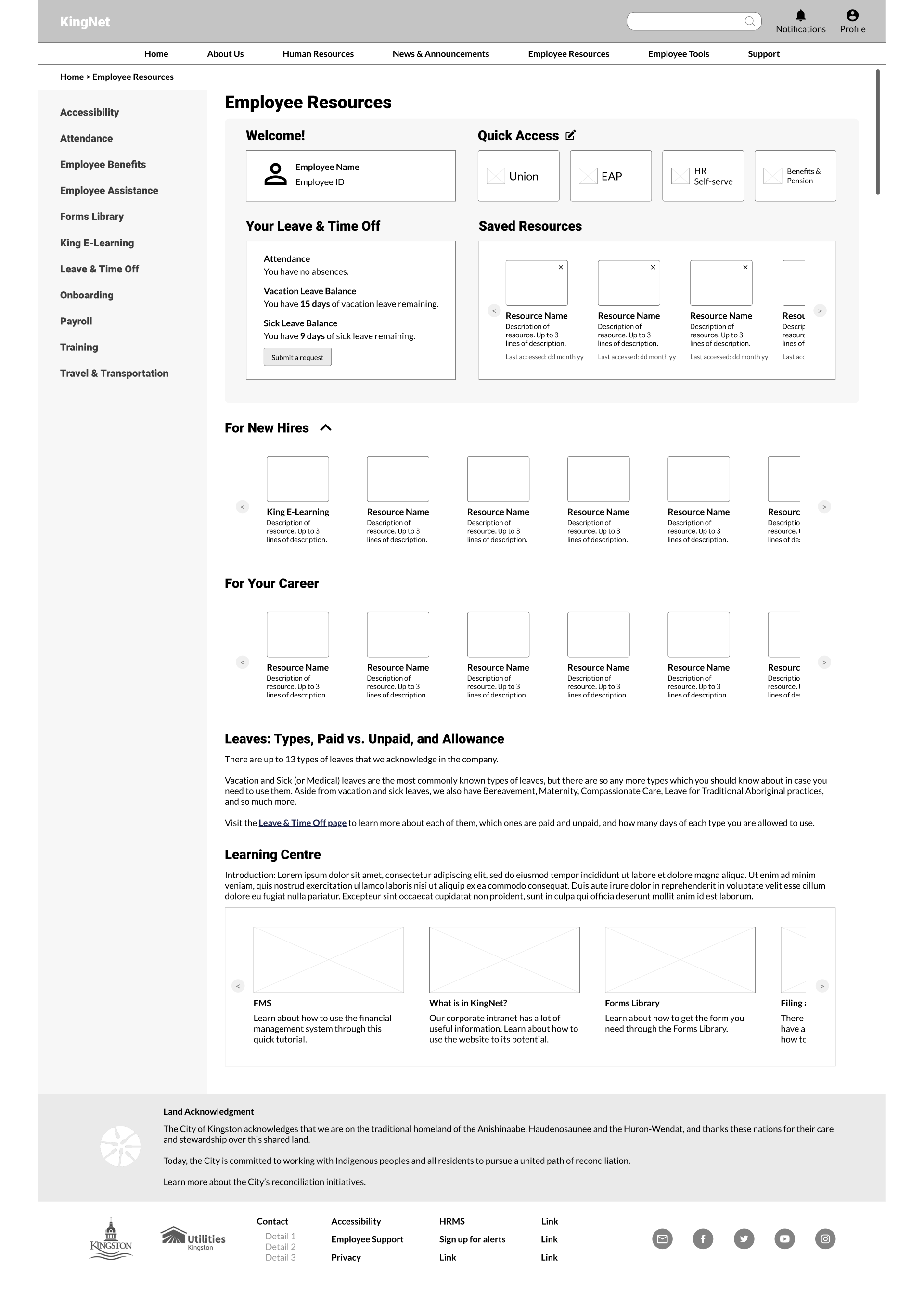
Iterative Wireframe Enhancements Post-Critique and Focus Group
KingNet’s landing page – wireframe
KingNet’s employee Resources Page – wireframe
KingNet 2.0 Delivery & Showcase Presentations.


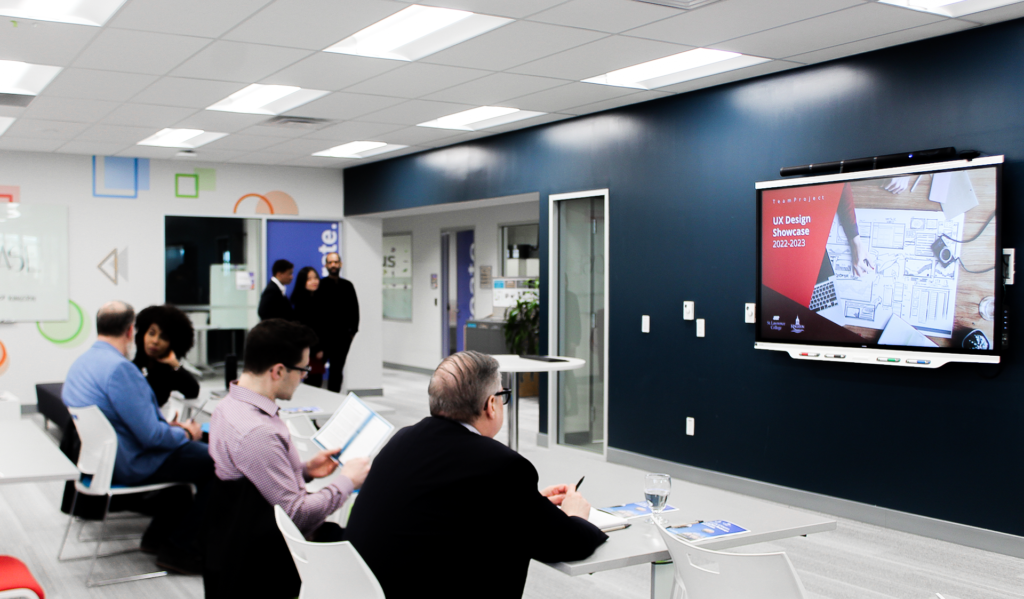
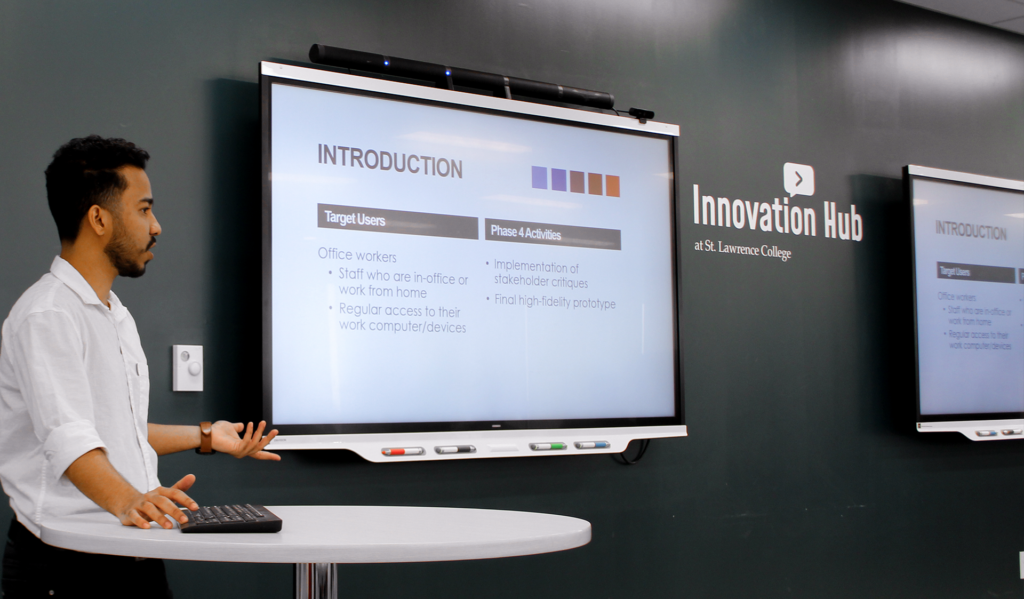
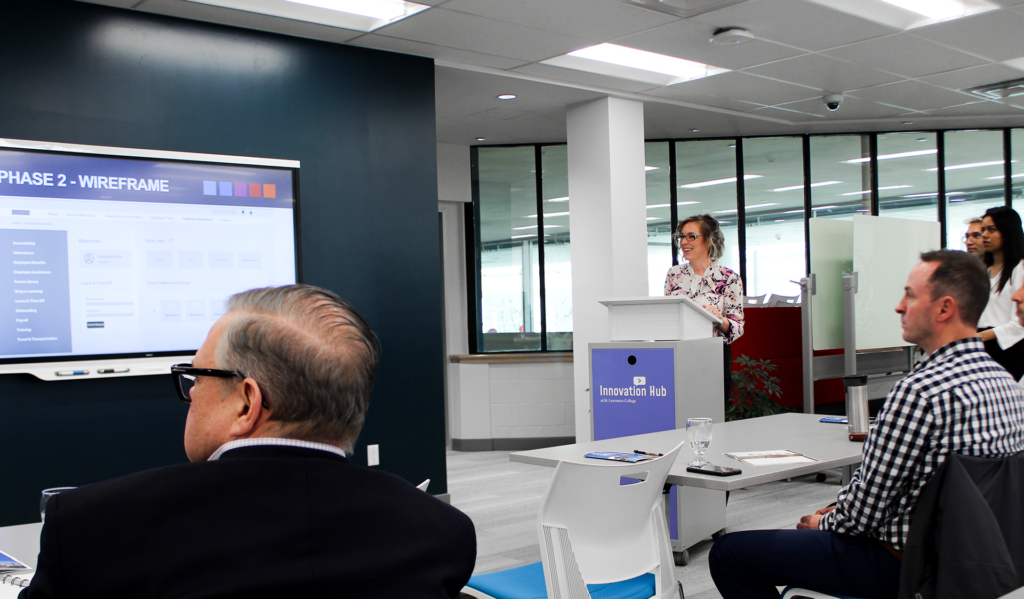
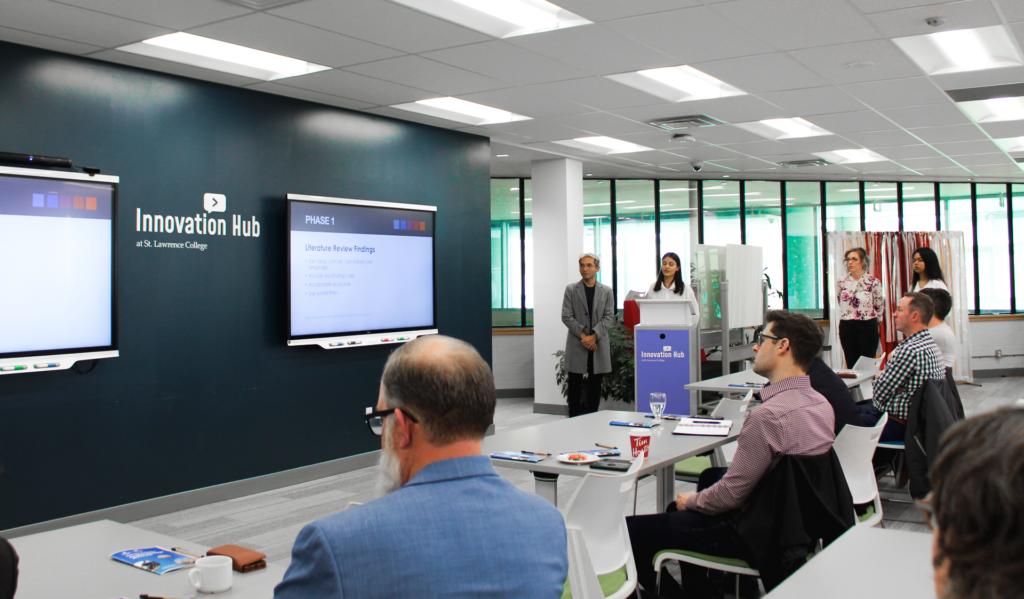
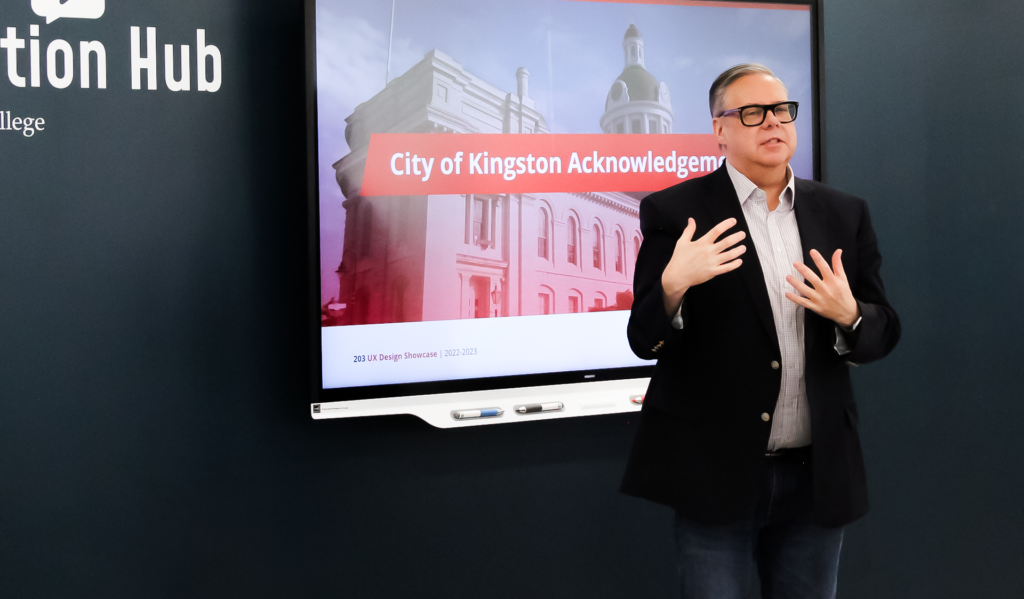
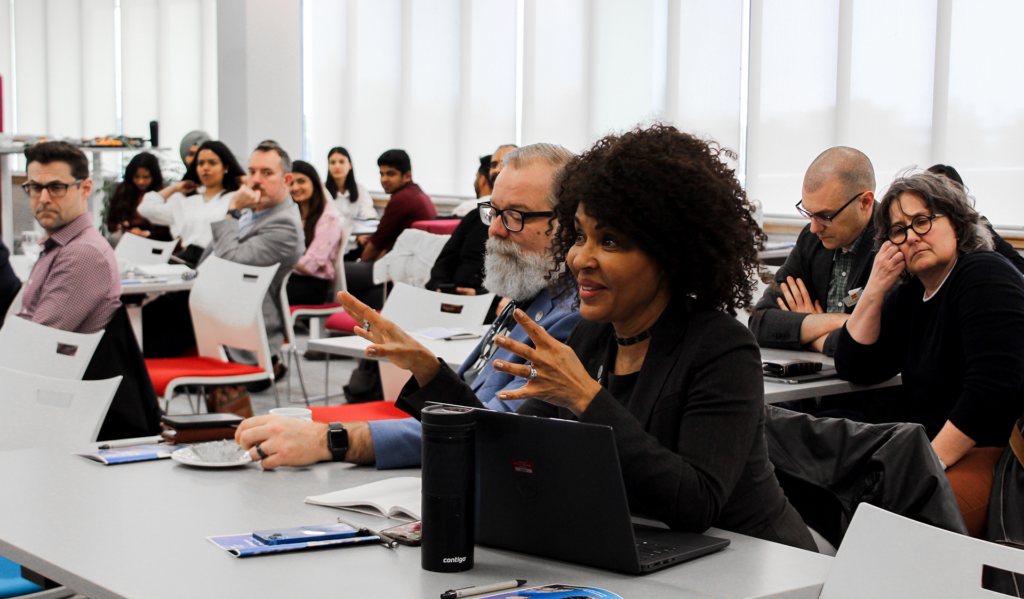
Photographs of my team and me showcasing the completed KingNet 2.0 to the project stakeholders,
explaining its key features, functionalities, future recommendations, and scope.
Following the presentations, Craig Desjardins, the Director of the Office of Strategy, Innovation & Partnerships at the City of Kingston,
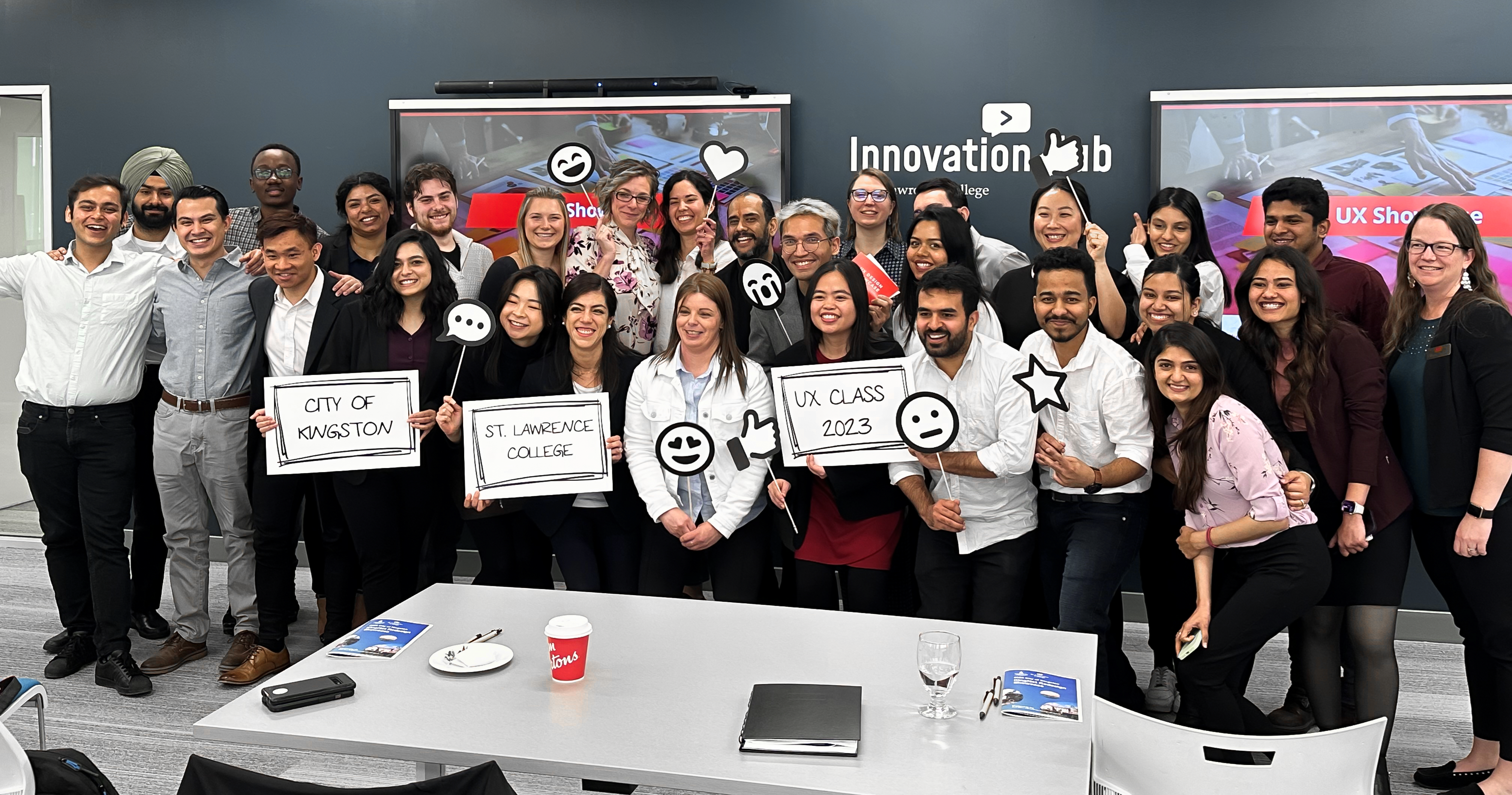
expressed gratitude for collaborating with the UX design batch of 2022-2023 from St. Lawrence College.
He commended the teams for their interesting and innovative ideas presented during the project, acknowledging the contributions made toward enhancing KingNet’s functionality and user experience. This positive reception underscores the successful outcome of the collaboration, reflecting improved engagement and appreciation for the revamped intranet platform.
KingNet 2.0, the flagship project of the St. Lawrence College UX Design cohort (2022-2023), was an exceptional learning experience and professional endeavor for aspiring UX designers. This project provided a platform to refine and showcase our expertise in UX research, sketching, wireframing, and crafting high-fidelity interactive prototypes within a real-world client engagement. Collaborating closely with the City of Kingston allowed us to navigate complex challenges and implement user-centered design principles, fostering valuable insights and practical skills essential for a career in UX design.